A forty-year-old warehouse model meets a generation that measures stores by efficiency. We mapped the runway and what to do with it.
The treasure-hunt warehouse built one of the most durable retail businesses in America. It was designed for a shopper with time, a car, and a tolerance for discovery as a trade for price.
That shopper is being replaced. By 2030, Millennials and Gen Z will be over 70% of US consumers — a cohort that measures a store by how efficiently it resolves a task, not how long it holds their attention.
Costco engaged us to answer a question the board was circling: how much runway is left before the legacy model starts costing more than it earns?
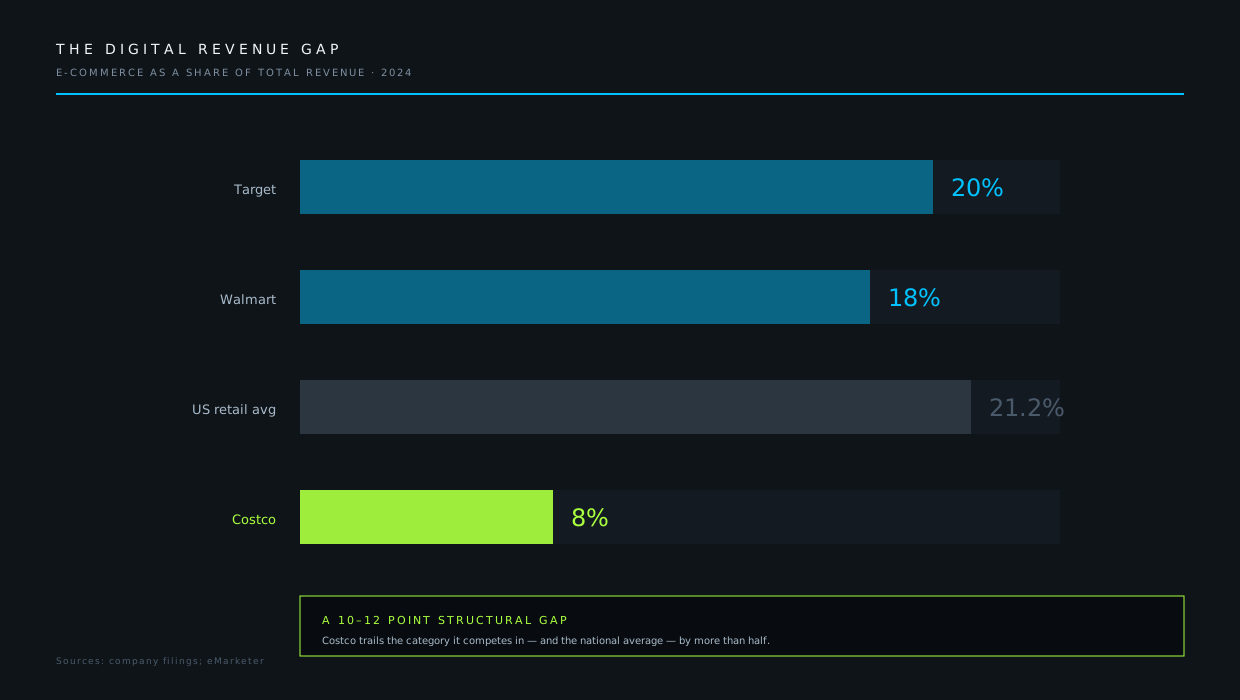
E-commerce reached 21.2% of US retail in 2024, up from 14% in 2019, and is forecast to pass 25% by 2027. Costco sits at 7–9% of revenue — less than half the category it competes in.
The exposure is sharper than the headline suggests. Membership fees account for over 72% of Costco's net income. The business does not earn primarily on goods; it earns on renewal. In 2024, US renewal dipped from 93.1% to 92.6% — small, but directionally the first signal that experience is starting to cost retention.
Walmart's 2023 earnings attribute a 12% lift in average spend per visit at Sam's Club to tech-enabled shopping. The nearest-neighbour competitor has already validated the thesis.
McKinsey's 2023 data puts Millennial and Gen Z expectation of a seamless omnichannel experience at 76%. For this cohort, digital integration is a baseline, not a differentiator.
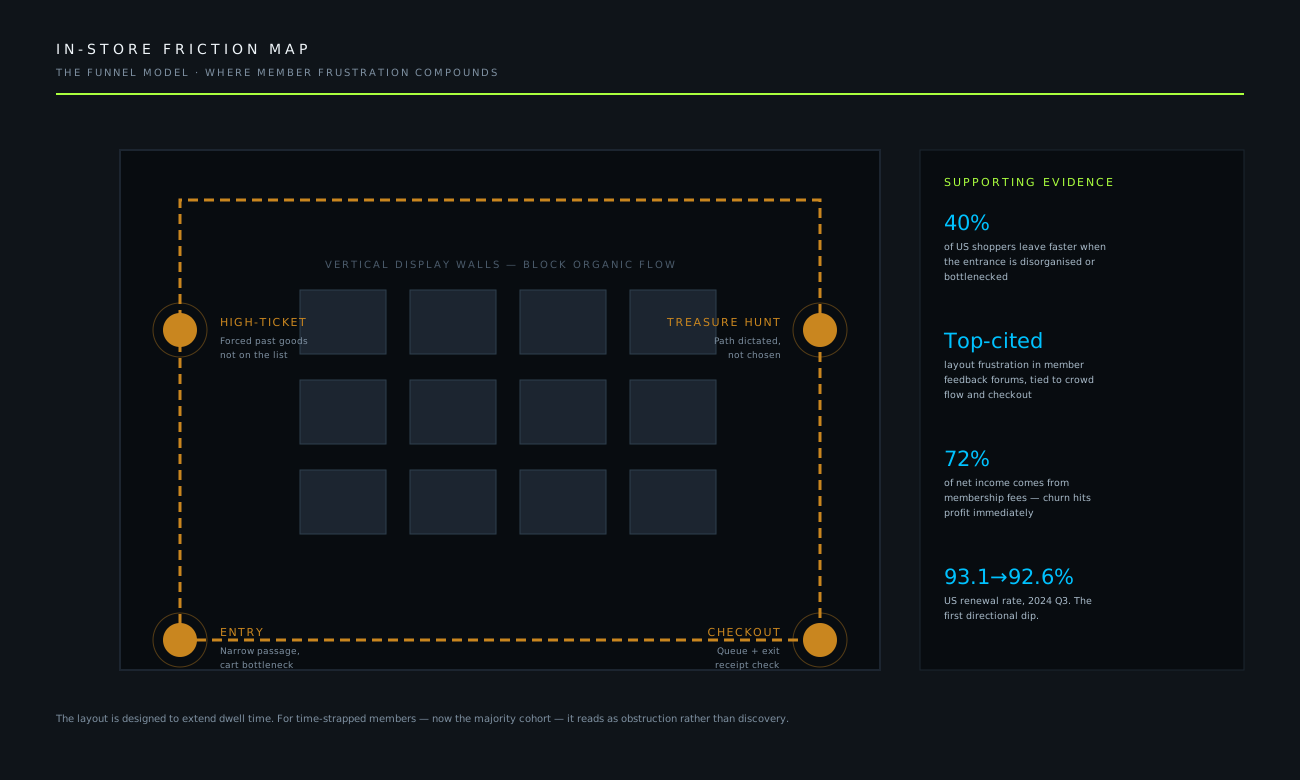
We audited the physical journey end to end. Friction compounds — it does not appear at one point and resolve. It begins in the parking lot and peaks at the exit.
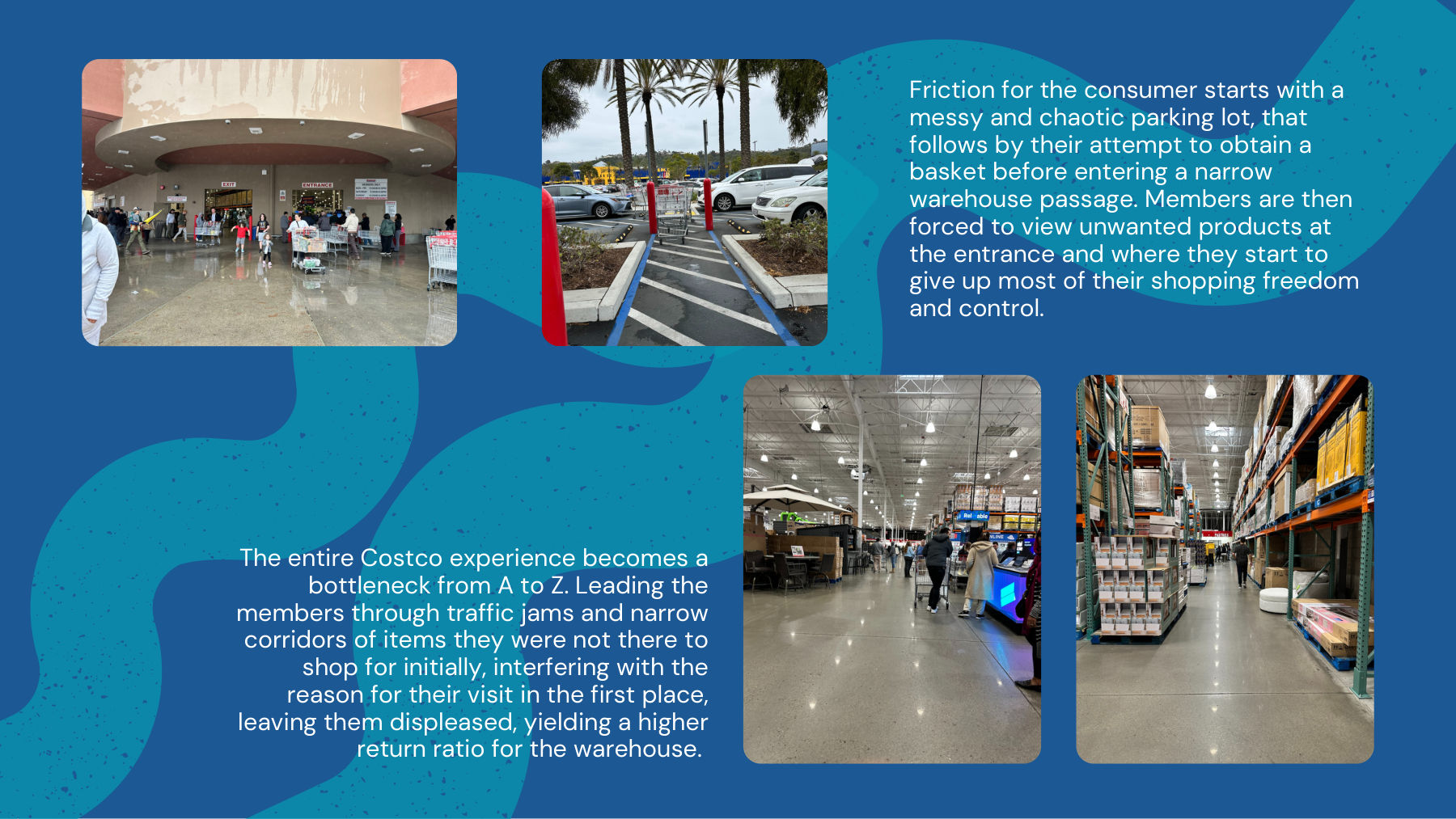
A chaotic lot, then a cart scramble, then a narrow entry passage. A 2023 Raydiant study found 40% of US shoppers leave faster when the entrance is disorganised or bottlenecked — the first impression is already working against dwell time.
Members are routed past high-ticket goods before reaching what they came for. For a time-strapped shopper this is not discovery — it is interference with the reason for the visit, and it correlates with higher return rates.
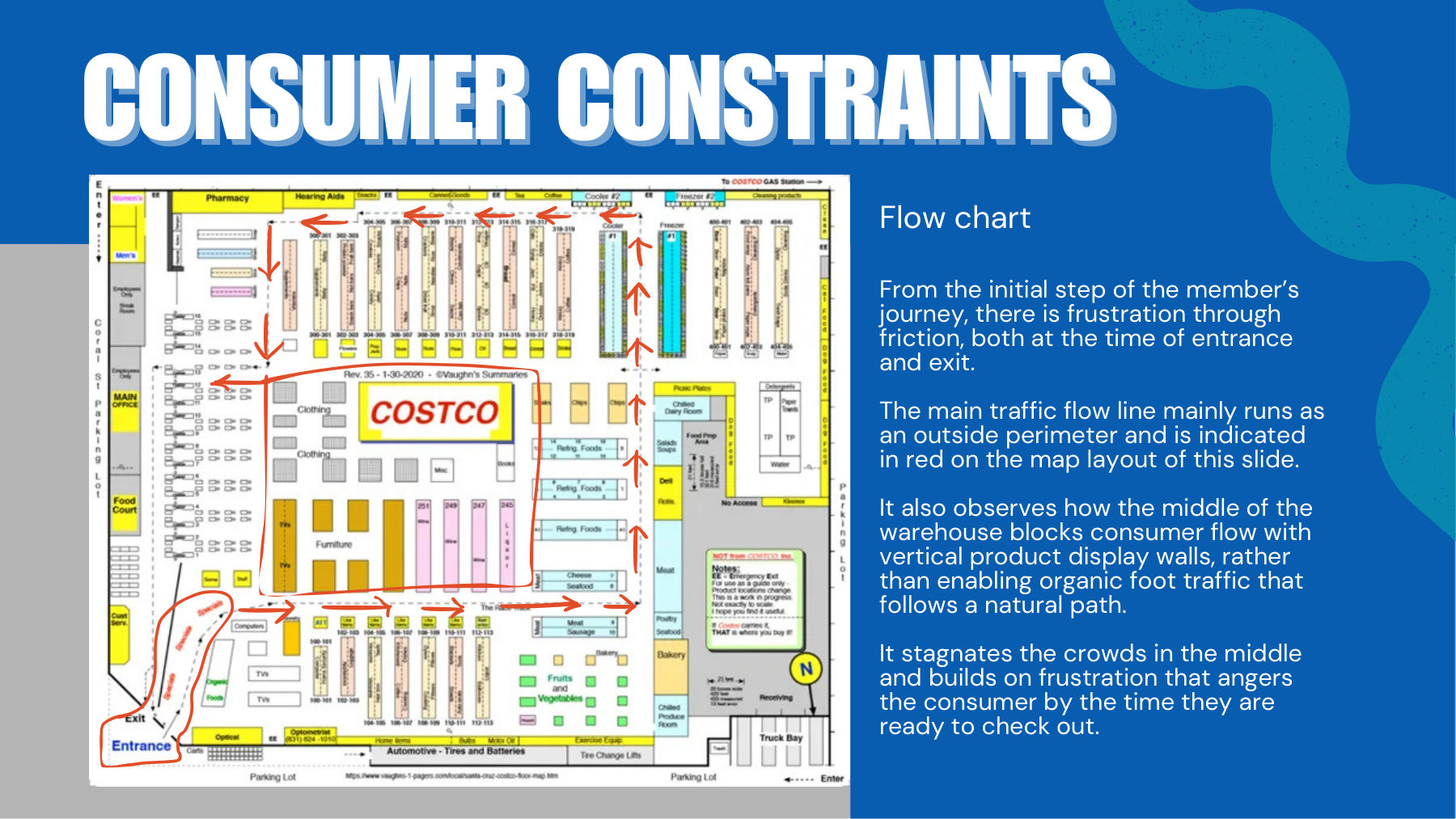
Vertical display walls through the middle of the warehouse prevent organic foot traffic from following a natural path. Crowds stagnate centrally, and frustration accumulates before checkout even begins.
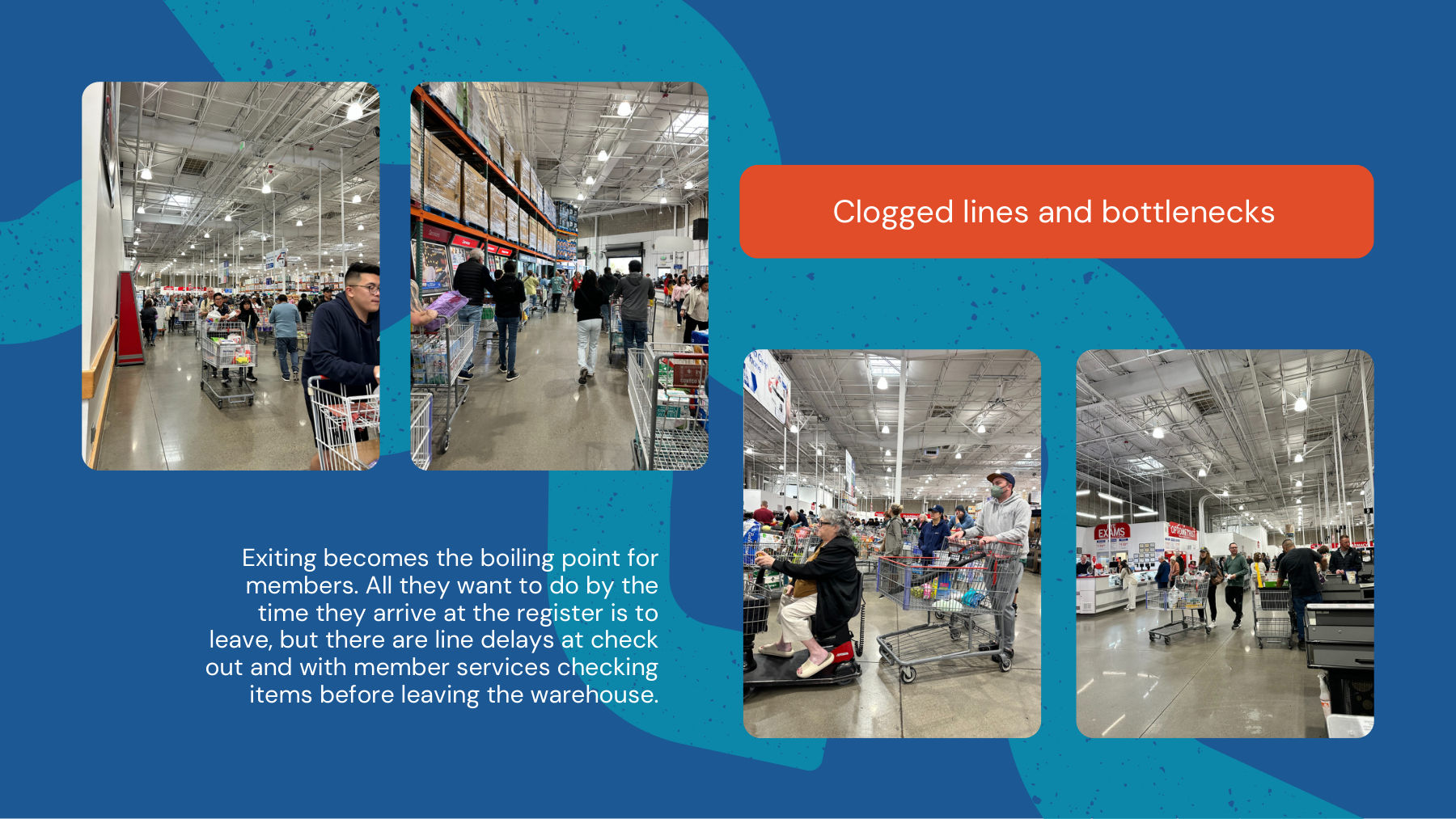
By the register the member wants one thing: to leave. Queue delays and the exit receipt check land at the moment of lowest patience — the final impression of every single visit.
Selected artifacts from the brand revitalisation strategy delivered to stakeholders — the market analysis, the annotated store-flow map, in-store documentation, and the phased roadmap.
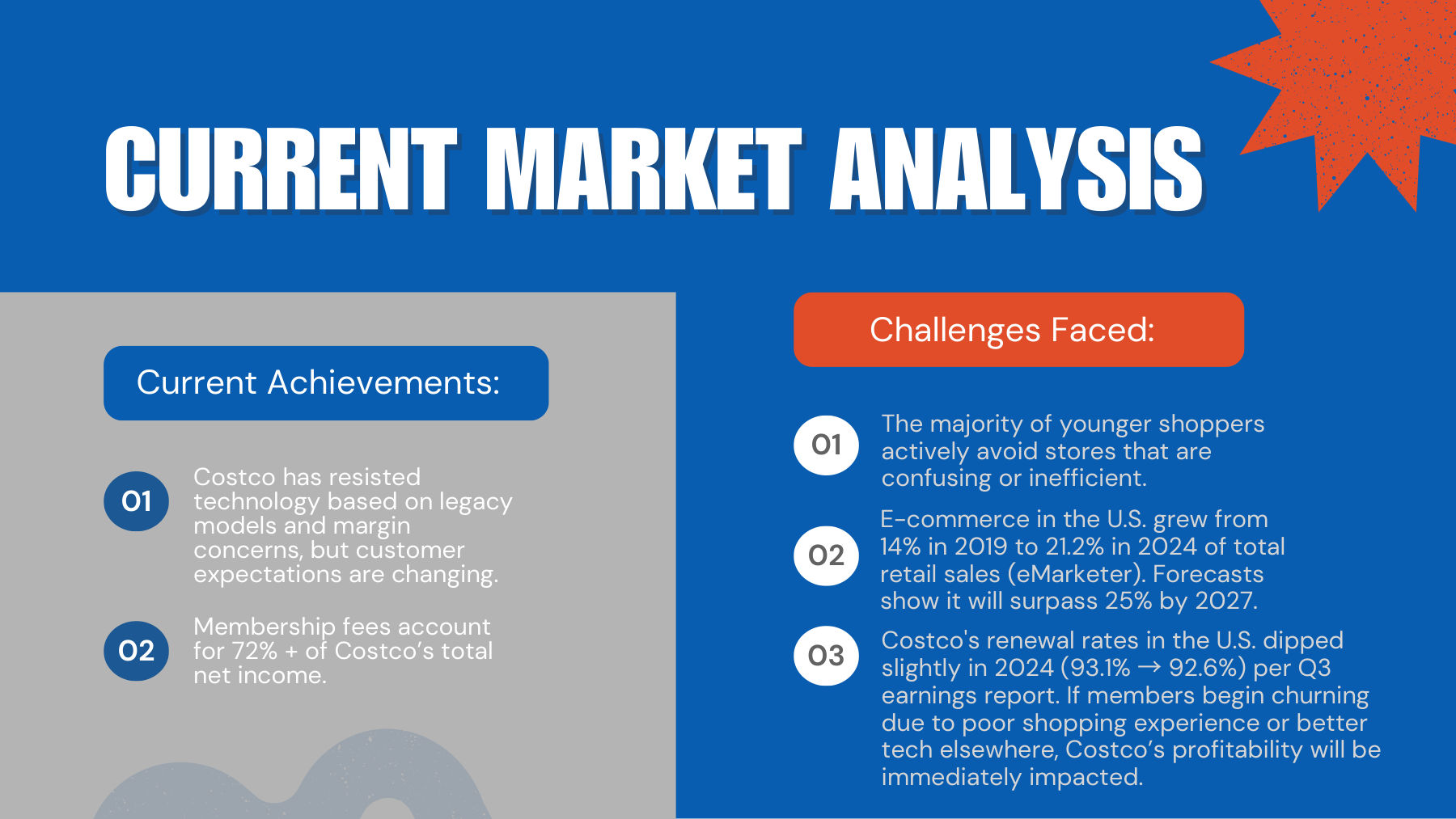
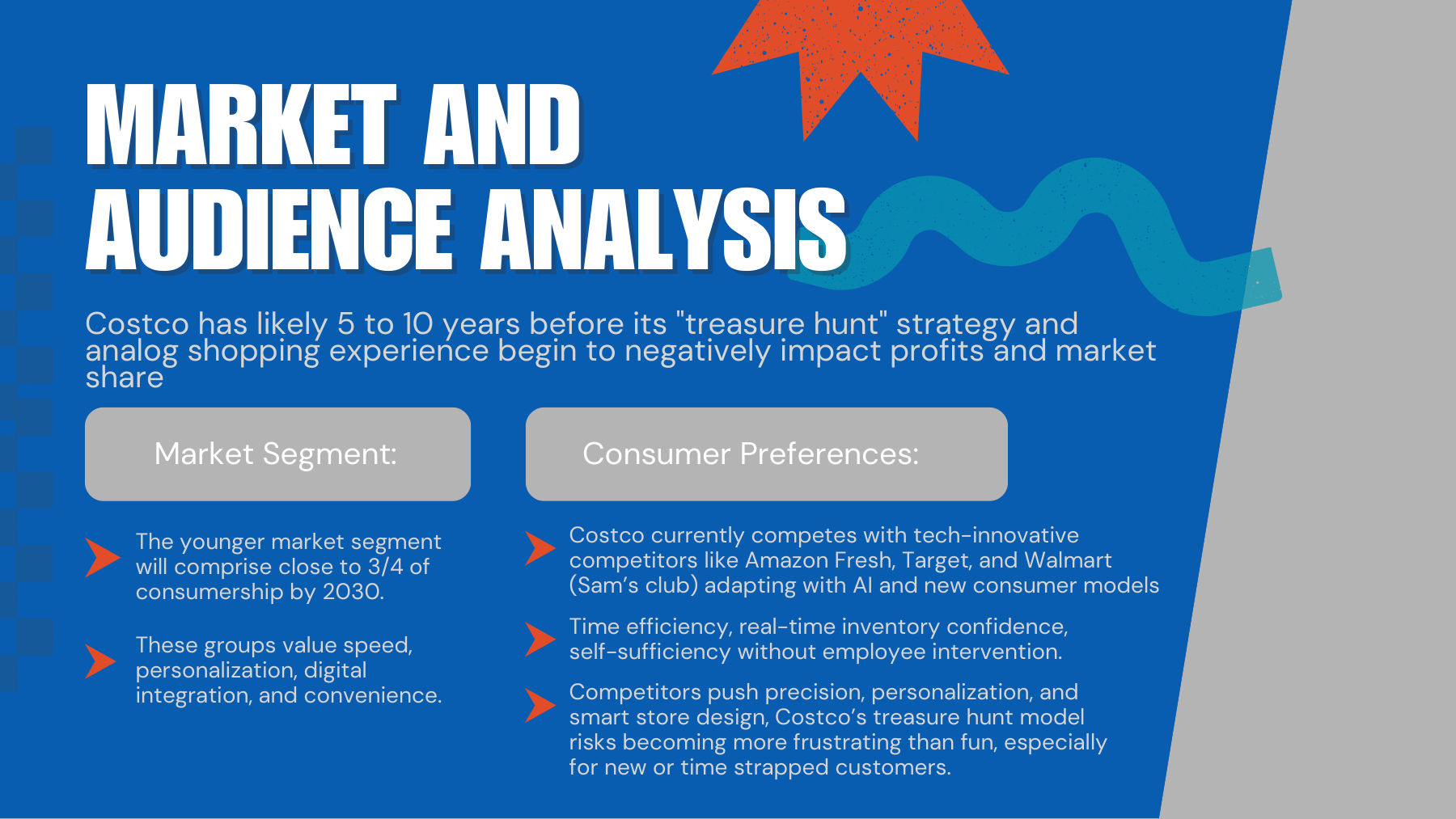
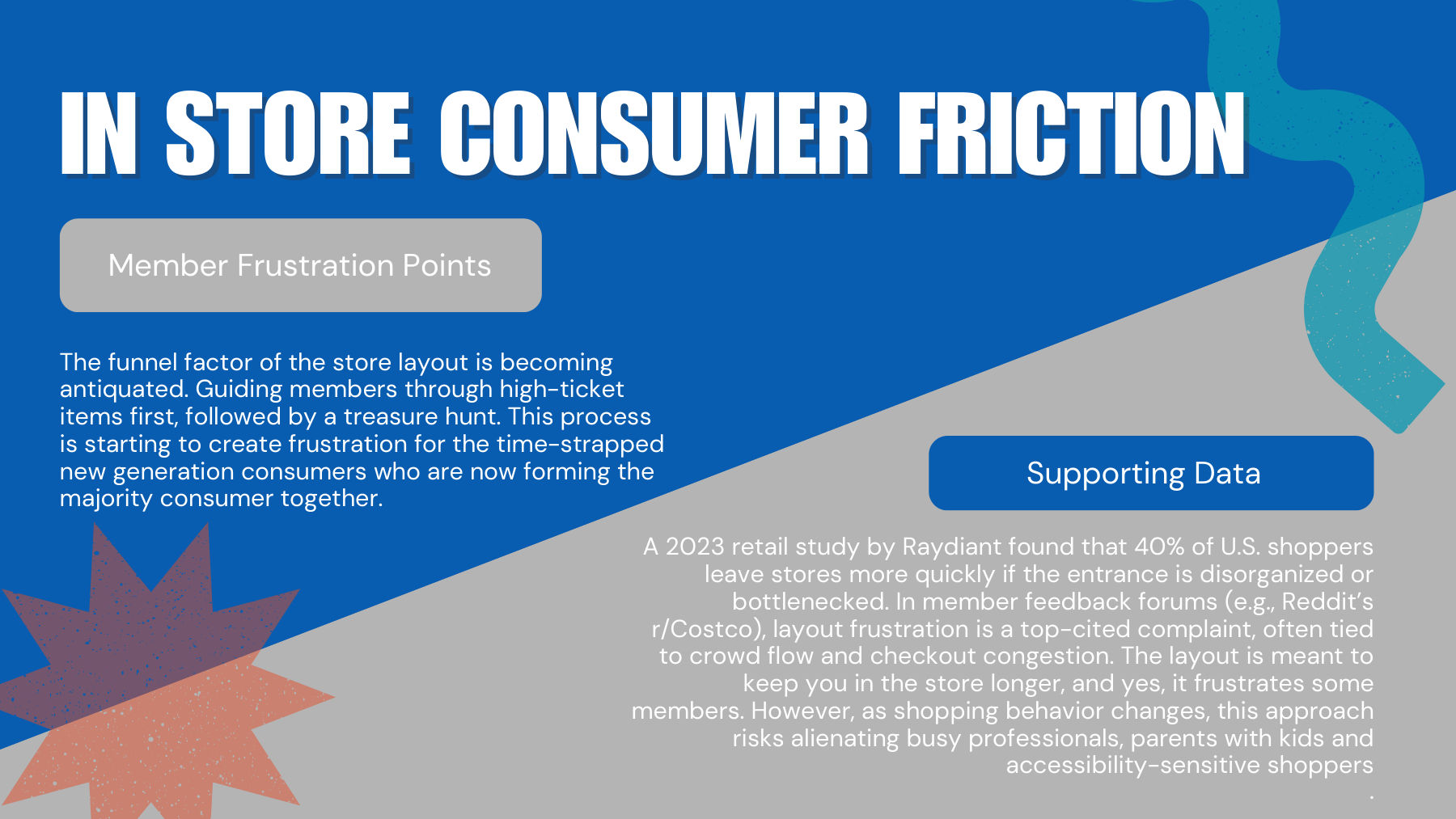
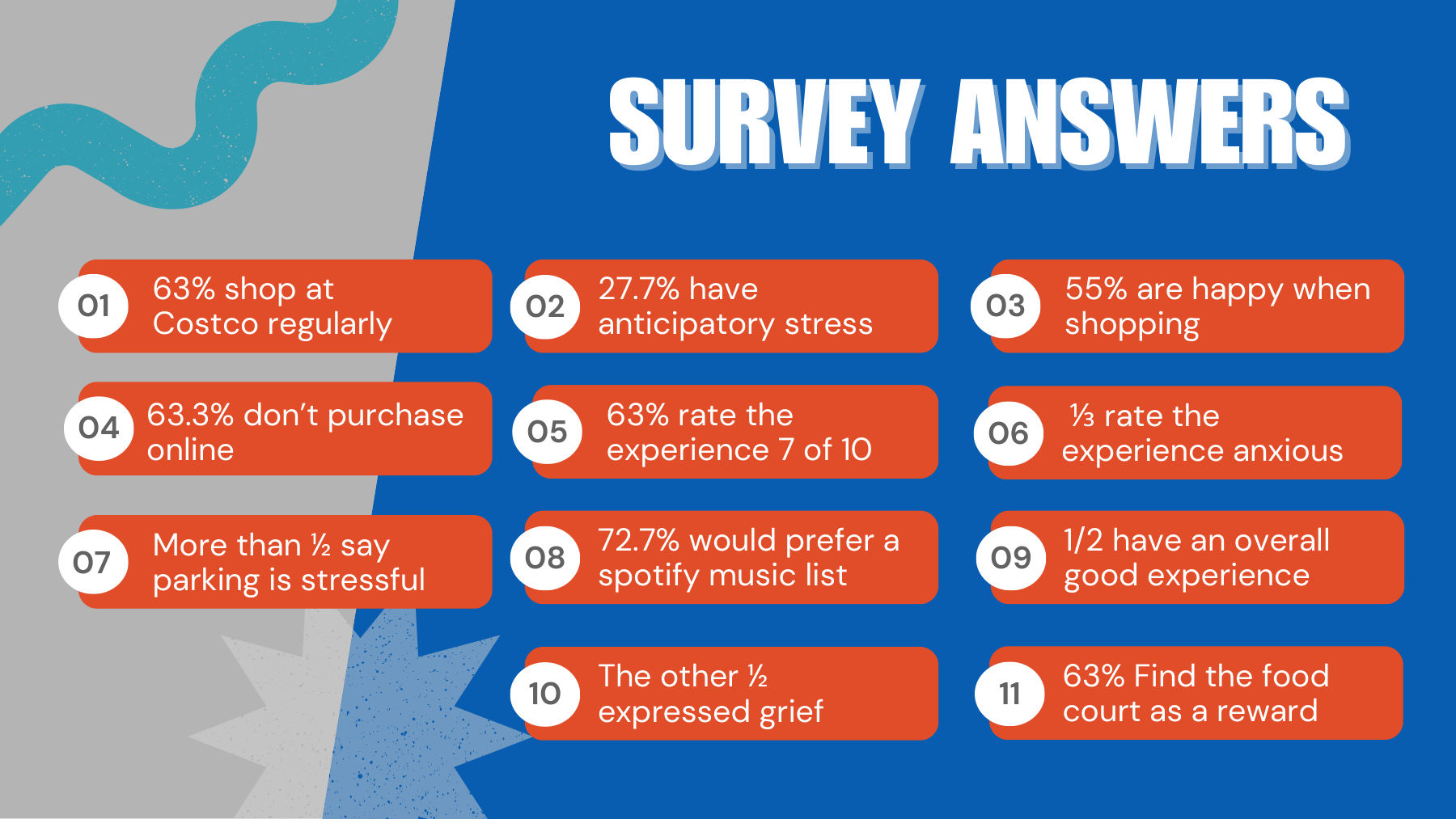
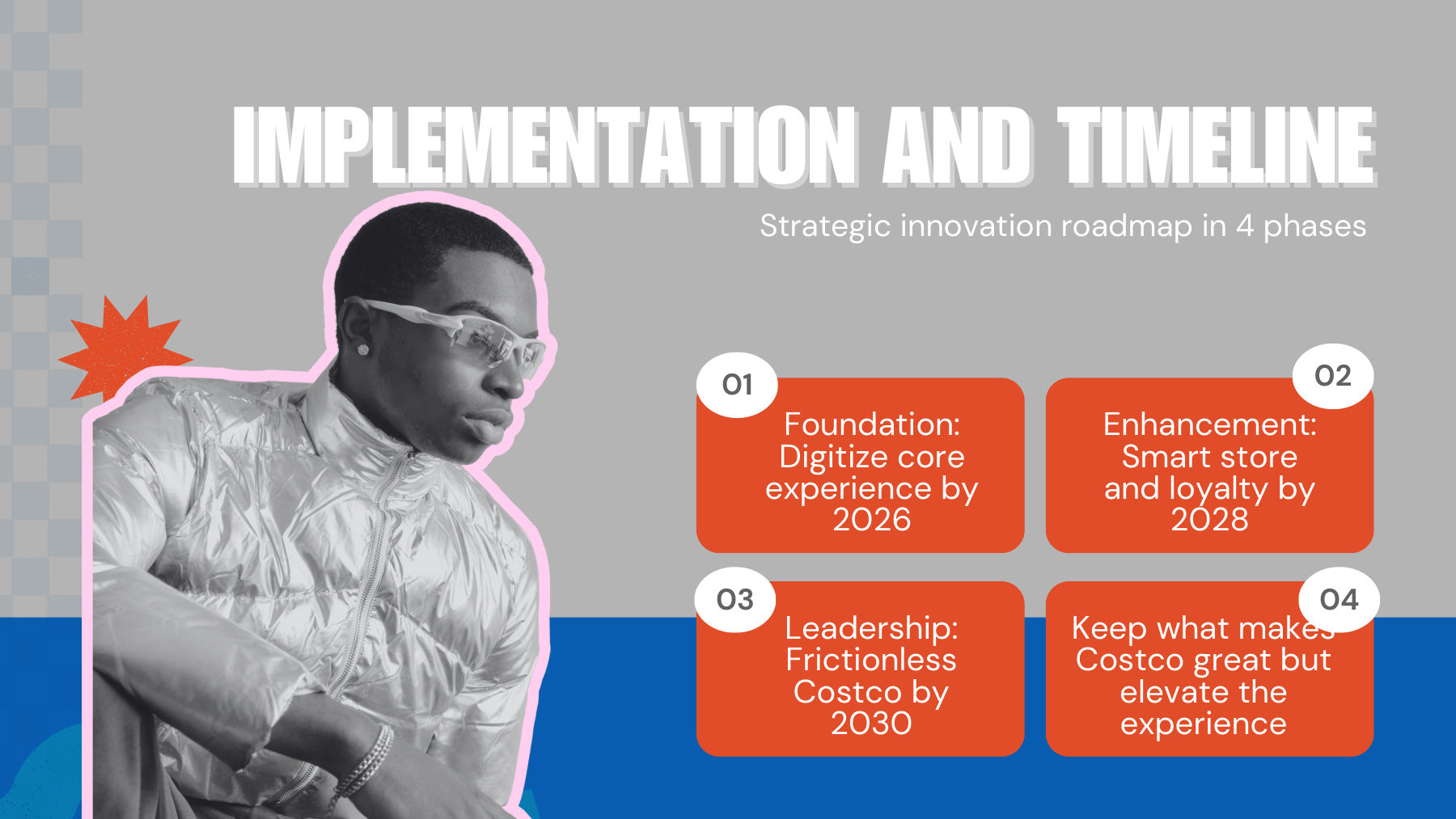
The full stakeholder presentation — market position, the friction audit, survey findings, and the case for the 2030 roadmap.
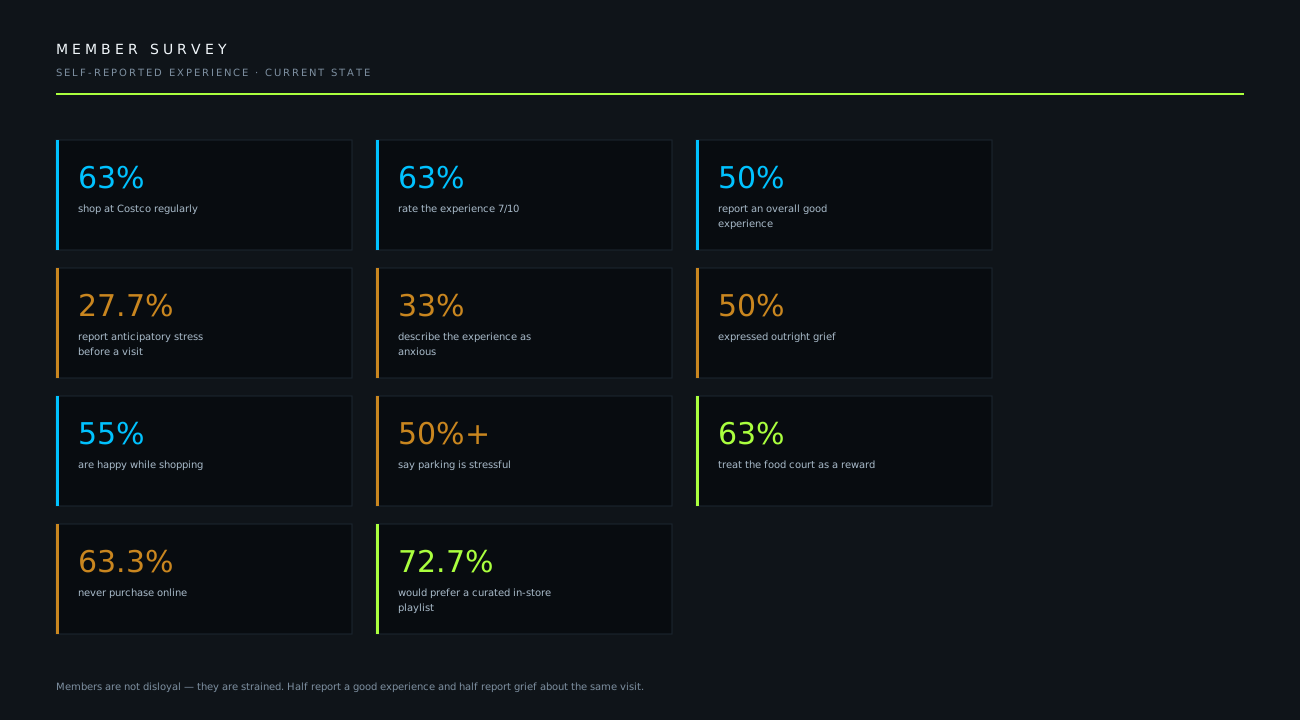
The survey data contains a contradiction worth sitting with: members are loyal and strained at the same time. Half describe a good experience. Half describe grief. They are describing the same trip.
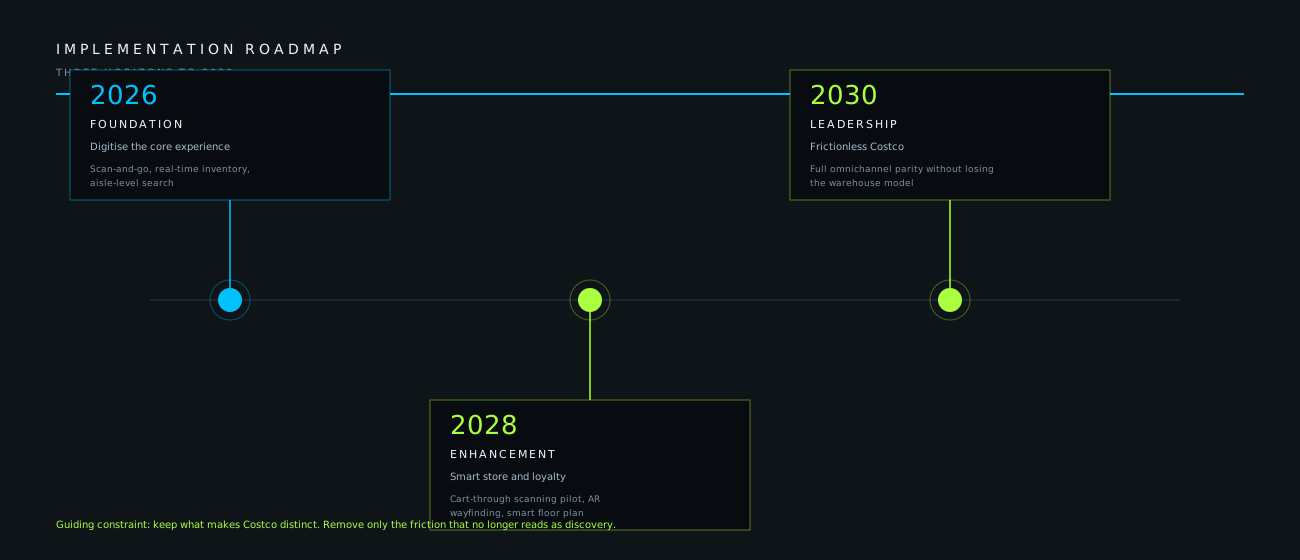
The recommendation was not to chase Amazon. Costco's advantage is the warehouse model, the membership economics, and the genuine pleasure of the treasure hunt for the shopper who wants it. The task is removing friction that no longer reads as discovery.
Real-time inventory with aisle-level location, and a digital list that reorders itself to match the store's physical path. This resolves the navigation complaint without touching the layout.
Mobile self-checkout removes the single highest-frustration moment in the journey — and does so at the point where it most affects the final impression.
A gate-style RFID or computer-vision scanner bulk-reads a full cart. Piloted in two or three urban warehouses, this is the highest-ceiling intervention in the set.
Bluetooth beacons or LiDAR mapping deliver GPS-grade indoor navigation — making the treasure hunt opt-in rather than compulsory.
The four interventions, as a member would experience them. Left shows the current trip; right shows the same trip with the smart mobile layer. Tap the right-hand screen to advance.
Measured on three recurring evaluations: sales performance monitoring, structured customer feedback, and maintenance of the deployed technology. The roadmap is a hypothesis — the evaluation cadence is what keeps it honest.