Thirty thousand calls a year from members navigating a benefits system during the worst week of their lives. We found the four causes.
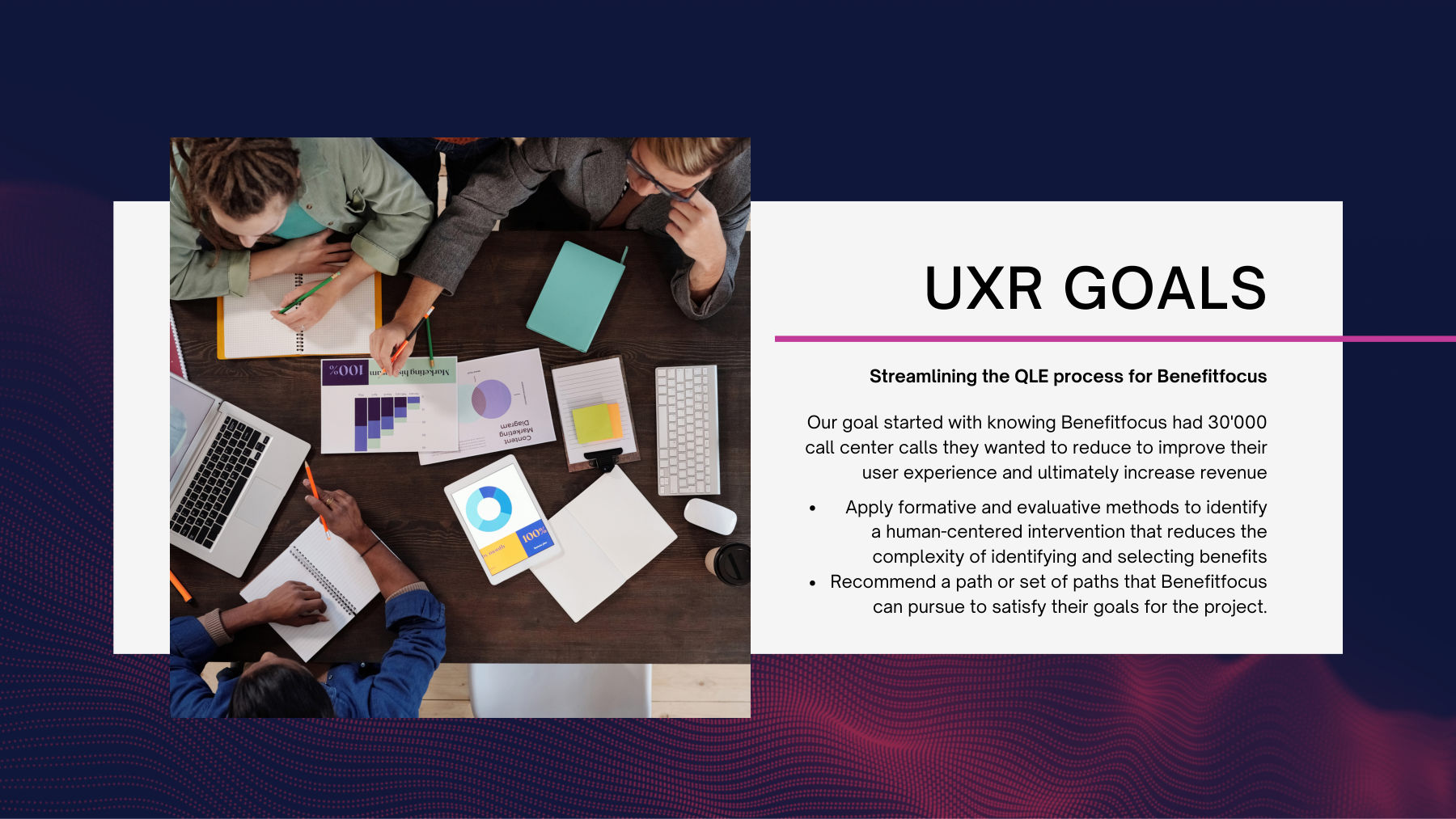
Benefitfocus came to us with a number and a target: 30,000 annual call-centre calls about Qualifying Life Events, and a mandate to reduce them without degrading the member experience.
A QLE is the moment a life change — a birth, a death, a divorce — alters someone's benefits eligibility. It is, by definition, the moment a member is least equipped to navigate a complex administrative system. They are frequently calling from a hospital.
The brief was framed as call deflection. We treated it as a research question: what is actually generating the calls?
We combined foundational research with an iterative design-and-test cycle, applying generative AI to transcript analysis at a scale manual coding could not reach.
User interviews, competitive analysis, and a literature review to establish where QLE processes fail across the category.
47 call-centre transcripts coded for theme, purpose, and emotional trend — validated against three AI tools before trusting any of them.
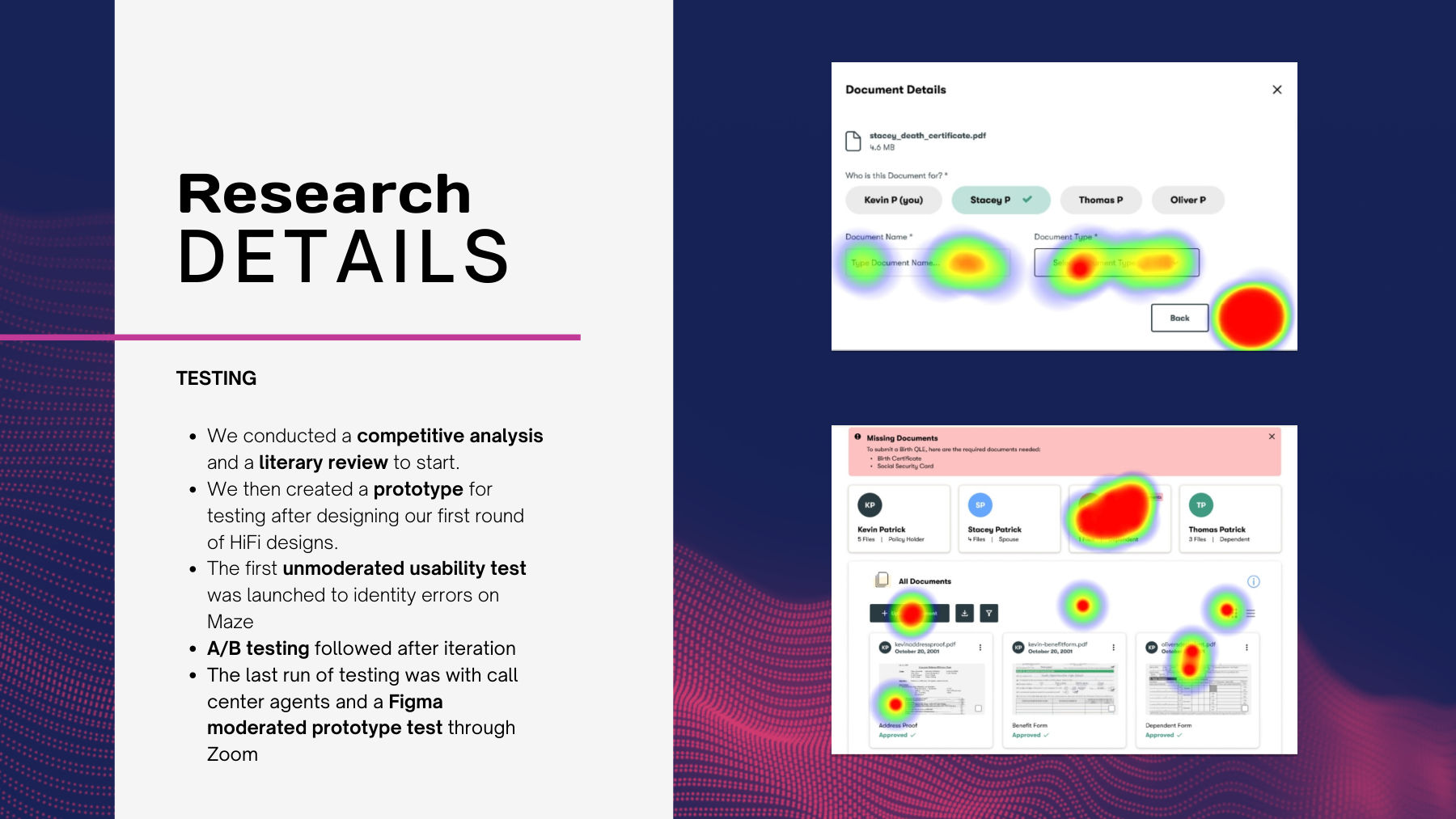
First-round high-fidelity designs, then an unmoderated Maze usability test to surface errors before investing further.
A/B testing after iteration, then a moderated Figma prototype test with call-centre agents over Zoom.
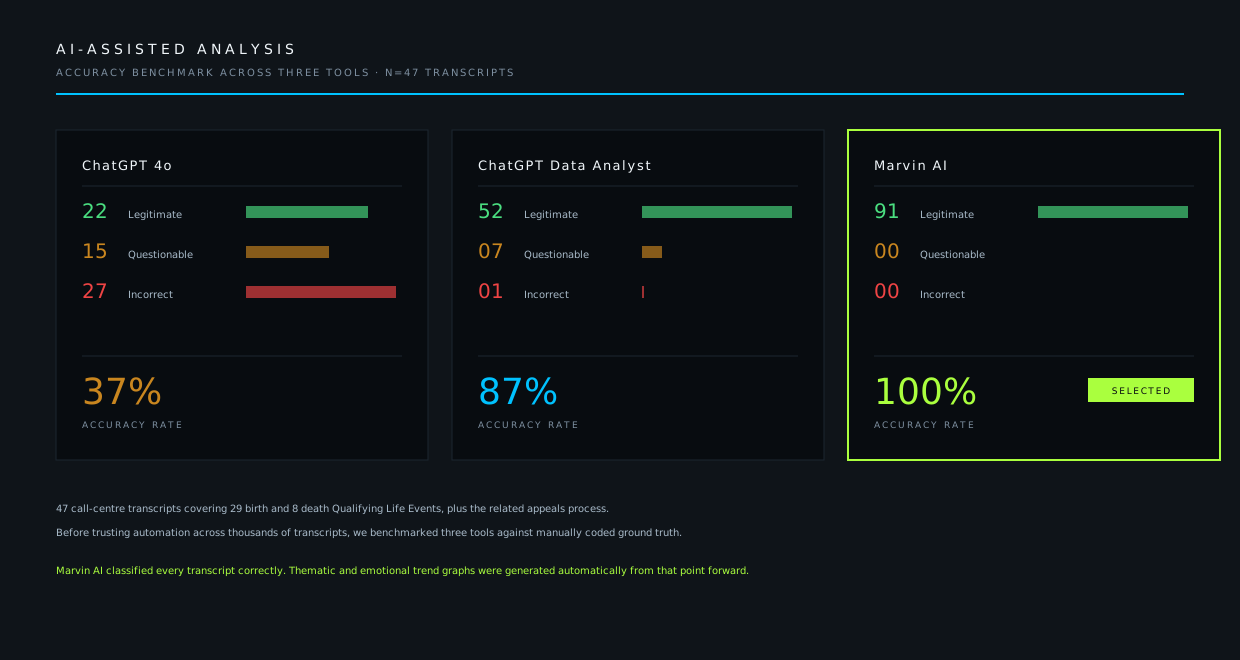
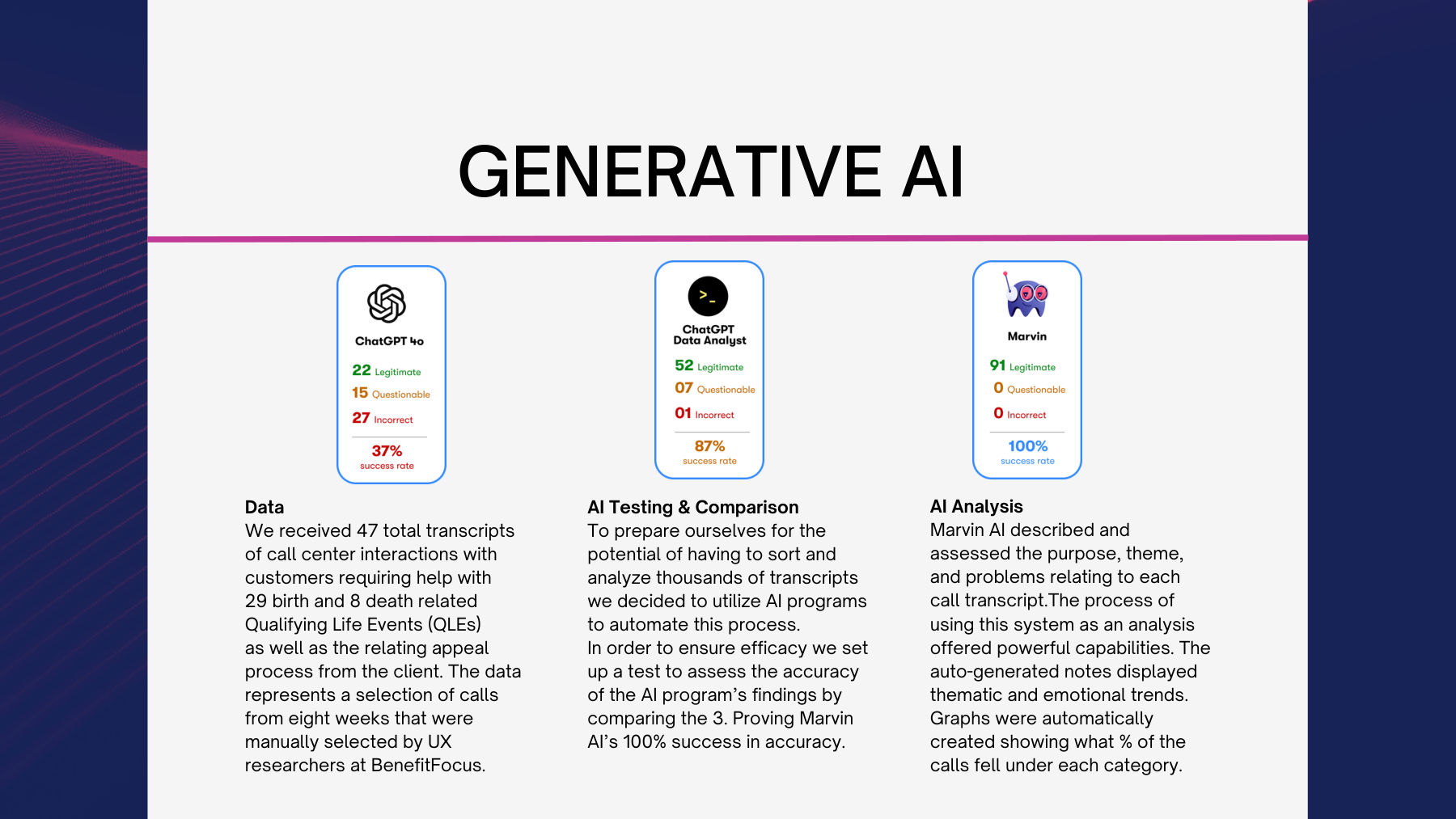
47 transcripts covering 29 birth-related and 8 death-related QLEs, selected across eight weeks by Benefitfocus researchers. To prepare for analysing thousands rather than dozens, we needed automation we could defend.
So we benchmarked three tools against manually coded ground truth before trusting any output. The spread was wide enough to justify the test on its own.
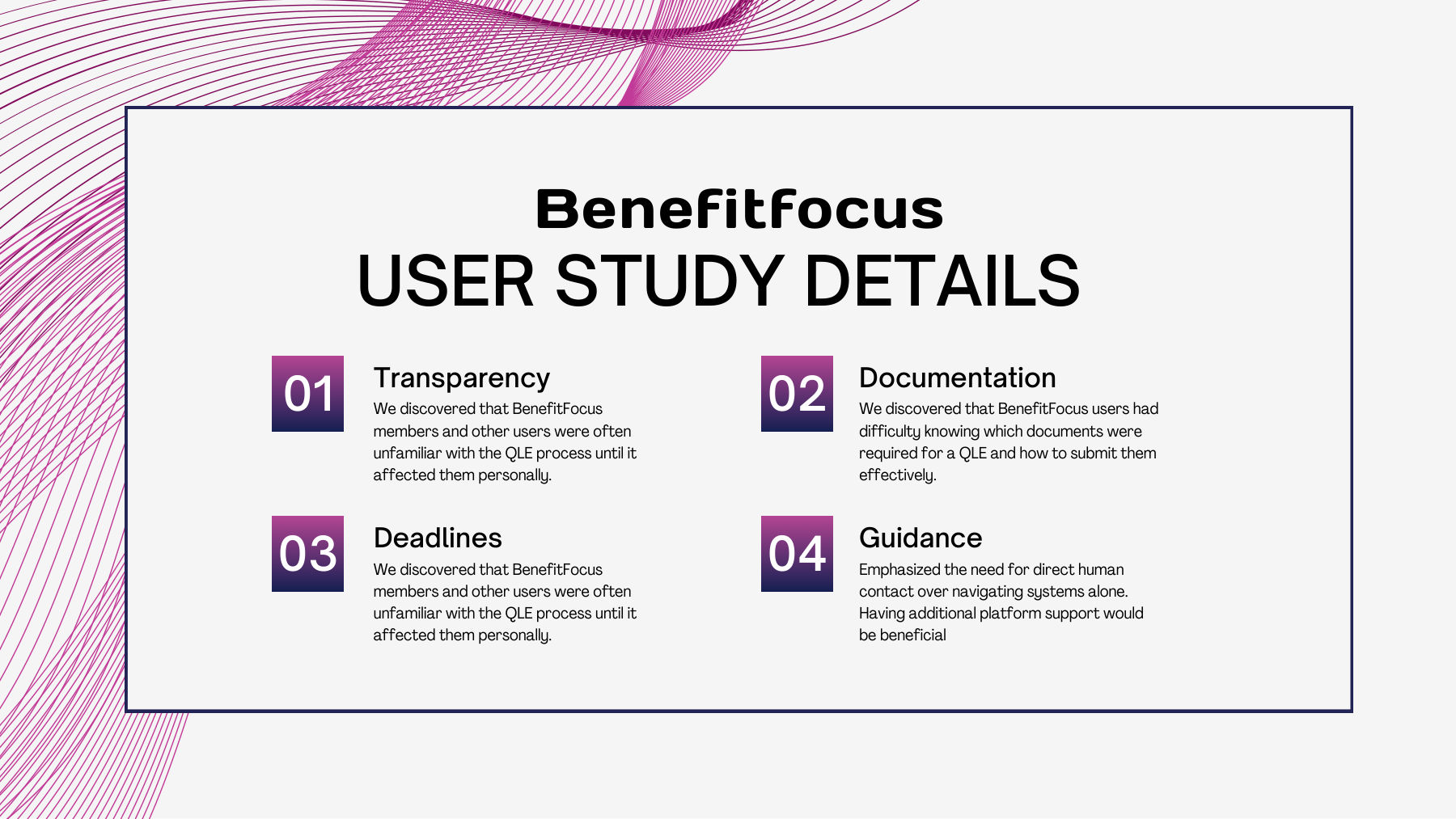
The calls were not random. They clustered into four causes, and all four share a root: the platform expects familiarity with a process members only encounter during a crisis.
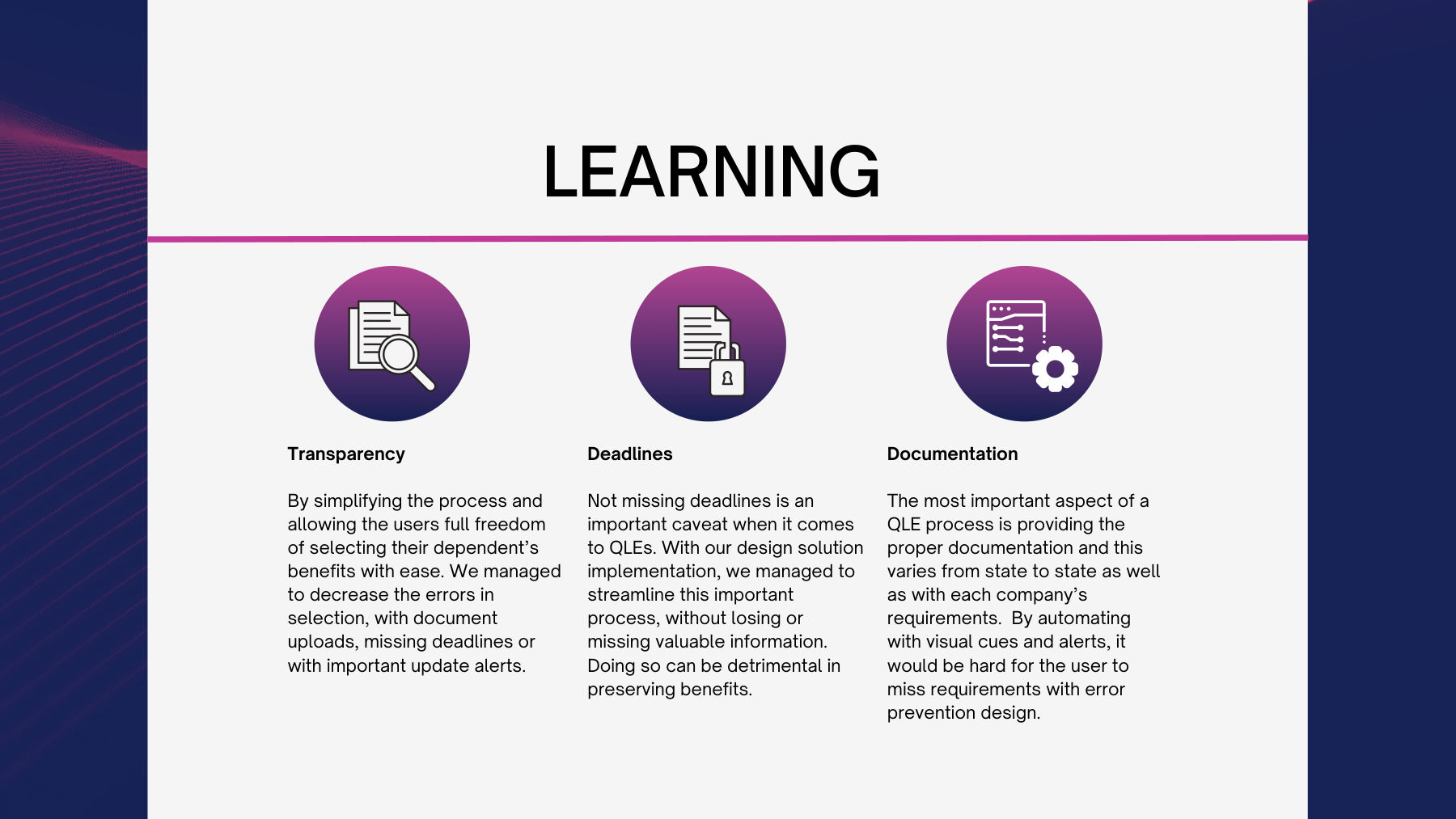
Members were unfamiliar with the QLE process until it affected them personally. There is no gradual onboarding to a system you only touch during a birth or a death — the first encounter is the high-stakes one.
Users could not determine which documents a QLE required or how to submit them effectively. Requirements vary by state and by employer, and the platform surfaced neither context.
Missing a QLE deadline can forfeit coverage entirely. Members were calling to confirm dates the platform already knew but had not made legible.
Members emphasised wanting direct human contact over navigating alone. This is not a failure of the interface — it is a signal about what the moment demands, and a system that ignores it generates calls by design.
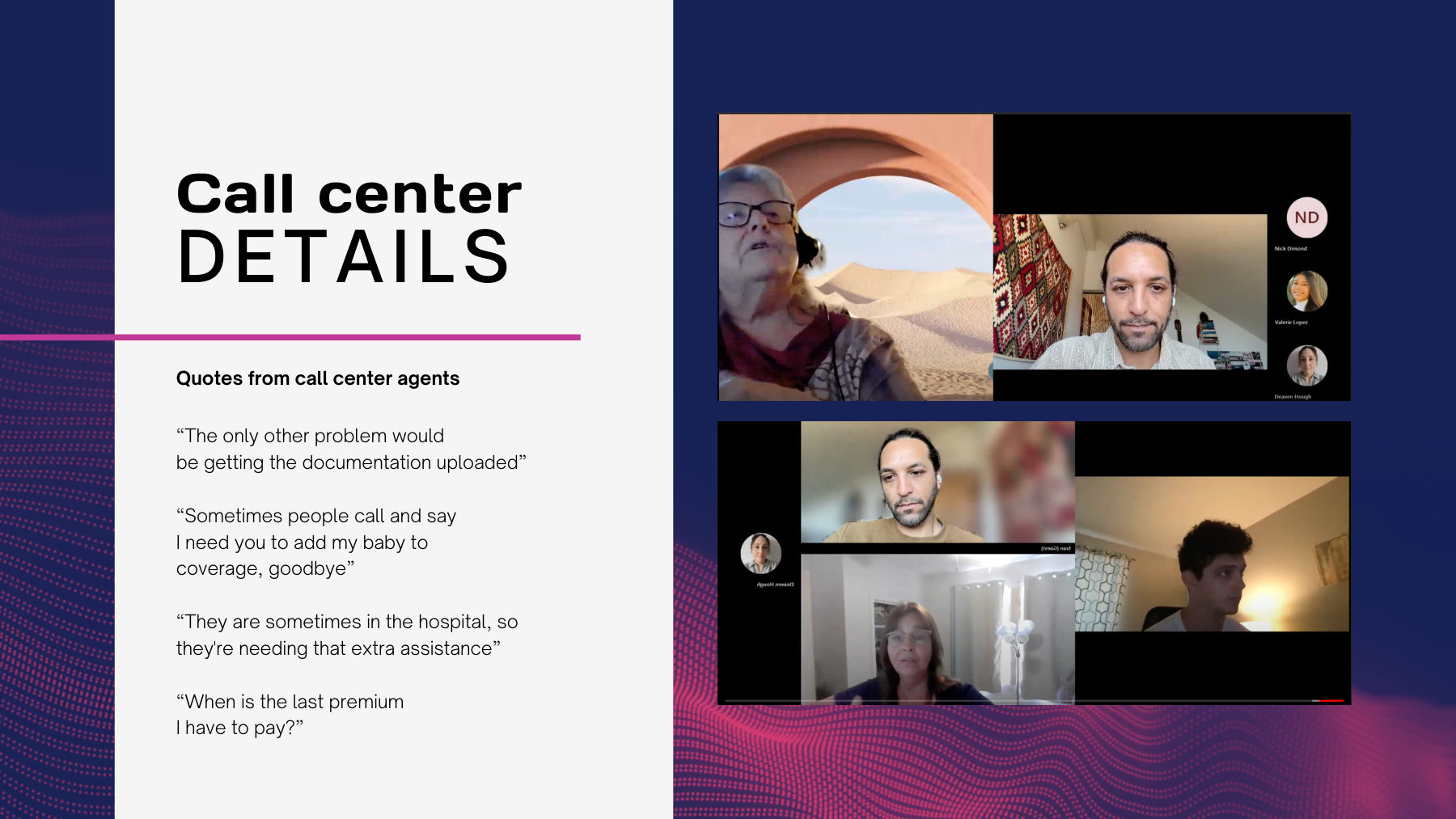
"They are sometimes in the hospital, so they're needing that extra assistance."
"Sometimes people call and say I need you to add my baby to coverage, goodbye."
— Call-centre agents, moderated sessions
The full research trail — UXR goals, study details, the AI accuracy benchmark, call-centre findings, testing heatmaps, and the Document Center design solutions.
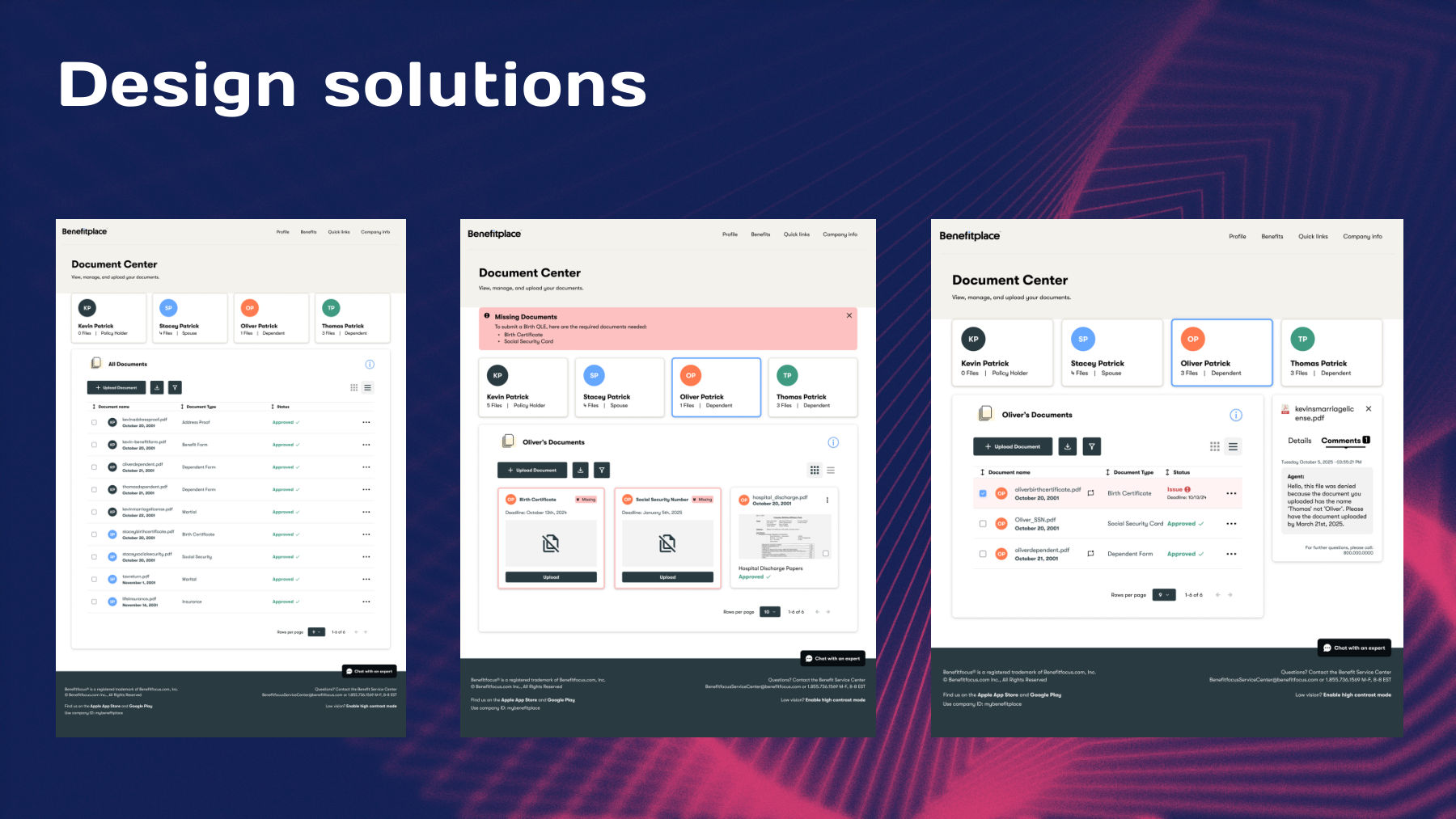
The redesign targeted the Document Center — the single screen where transparency, documentation, and deadlines all converge.
Members choose dependants' benefits directly, with errors in selection, upload, and deadline tracking caught at the point of action rather than surfaced afterwards.
A missing-documents banner states exactly what a given QLE needs — birth certificate, social security card — with per-dependant upload status visible at a glance.
Each outstanding item carries its own deadline inline. The member never has to reconstruct which date governs which document.
When a document is denied, the agent's reason appears against the file itself — resolving in-product what previously required a phone call to understand.
Because requirements vary by state and employer, automated visual cues and alerts do the work a member cannot reasonably be expected to do themselves. The design goal was making the requirement hard to miss, not making the error easy to fix.
The four causes of the 30,000 calls, resolved in the interface. Left shows what generated the call; right shows the proposed state. Tap the right-hand screen to advance.
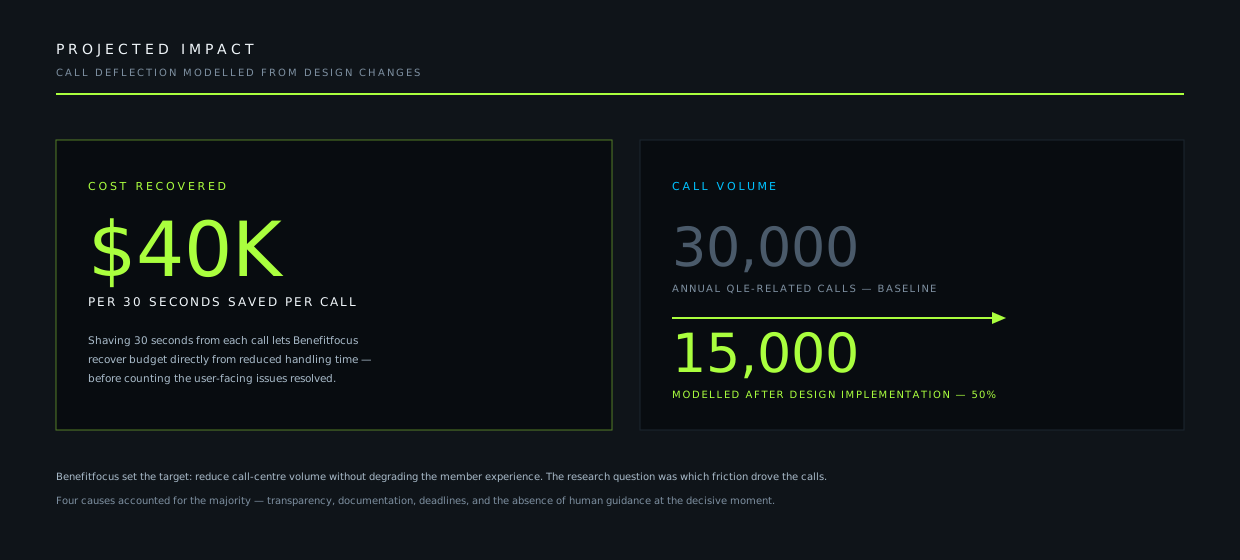
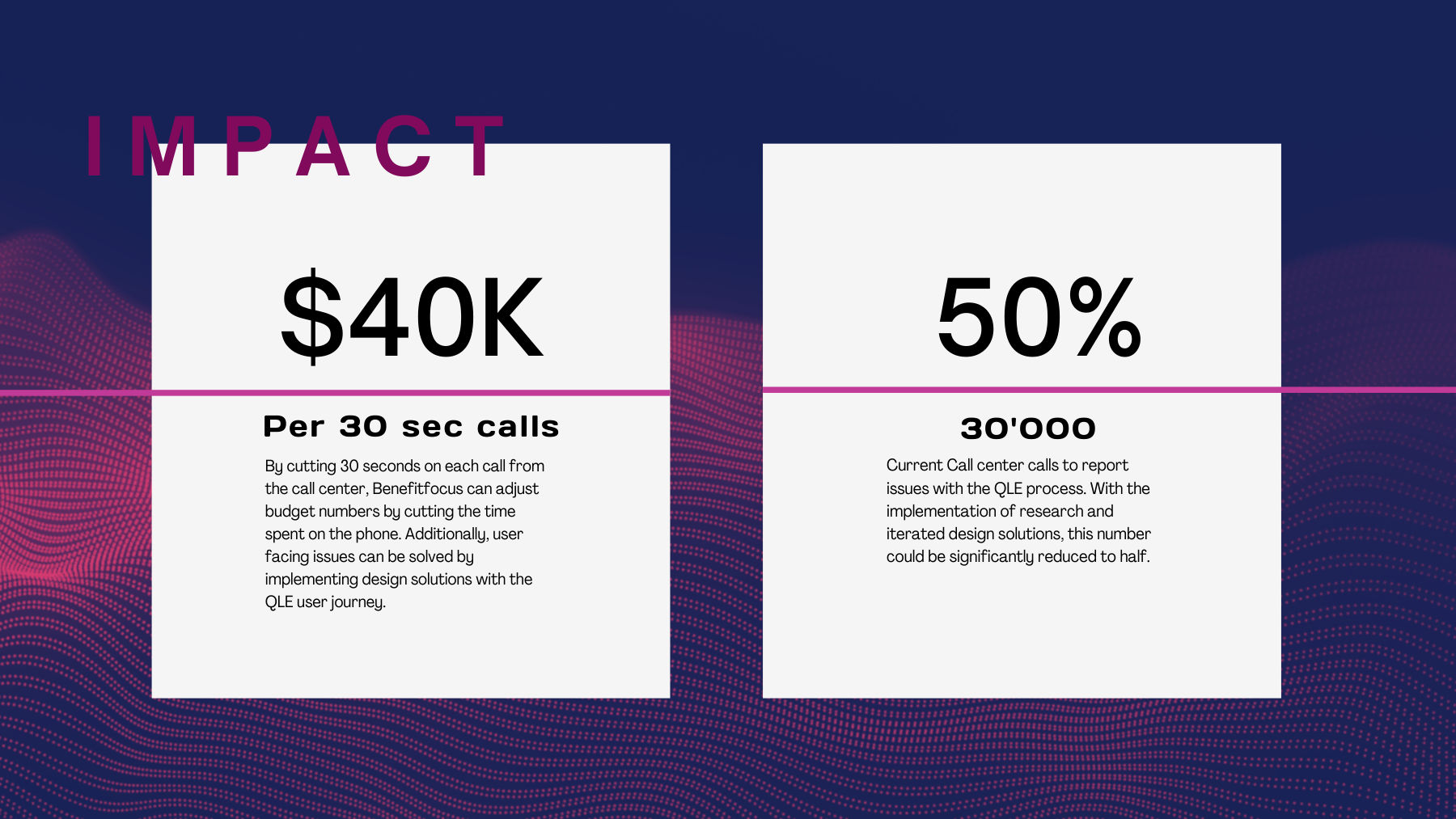
The outcome was not a wall between members and support. It was removing the 30,000 calls that existed because the platform withheld information it already had — and leaving the ones where a person genuinely needs a person.